
Fuse box upgrades in Purleywith proper RCD protection
A modern metal consumer unit with RCBO protection disconnects a fault on one circuit in milliseconds, instead of leaving an old rewireable fuse board to do nothing at all while a cable heats up behind your plaster.
NAPIT registered and Part P certified, £2 million insured, 10/10 on Checkatrade, 320 reviews logged over the years, one year workmanship guarantee.
NAPIT registered
Government-approved competent person scheme
Part P registered
Domestic work certified to Building Regulations
£2 million cover
Public liability insurance on every job
1 year guarantee
Workmanship guaranteed for twelve months
10/10 on Checkatrade
320 reviews logged on the profile over the years
Service overview
Consumer unit upgrades explained
An old board with rewireable fuses offers none of the shock protection a modern consumer unit gives you. We replace it, test every circuit behind it and hand over the paperwork.
What it involves
A consumer unit upgrade replaces the fuse board with a modern enclosure containing a main switch, RCD or RCBO protection for every circuit, and where appropriate surge protection and an arc fault detection device. Current regulations require the enclosure to be non-combustible, which in practice means steel.
It is not a straight swap. Before the new board goes on the wall, the earthing arrangement and main protective bonding are checked and corrected, and every existing circuit is tested, because the new board's protective devices are only meaningful if the circuits behind them are sound.
Who it is for
Anyone in Purley, Croydon or the surrounding Surrey area with a board full of ceramic or rewireable fuses, a plastic board with a single RCD, or no RCD protection at all. Landlords clearing EICR codes. Homeowners adding an EV charger, an electric shower or a garden office where the existing board has no spare ways or insufficient protection.
When you need it
Upgrade when the board has rewireable fuses, when it is plastic and unprotected, when there is no RCD, when the board is full, when an EICR has coded it, or when a new high-load circuit is being added.
Also upgrade when a single RCD protects the whole house: one fault anywhere takes out every circuit including the freezer and the boiler, usually at night, and you have no way of telling which circuit caused it.
Why it needs a qualified electrician
Consumer unit replacement is notifiable work under Part P and must be tested and certified. It also involves working close to the incoming supply and, where the meter tails need pulling, coordinating with the supply authority.
The riskiest part is what the testing reveals. Around a third of the boards we replace sit on top of at least one circuit fault that the old fuse board was never going to detect. A competent electrician finds that during testing; an unregistered one energises it and walks away.
What happens if it waits
The cost of leaving it
An old board is not a neutral component, it is an absence of protection.
Risks and escalation
- Rewireable fuses can be fitted with the wrong gauge wire, allowing a cable to carry far more current than it is rated for until it overheats.
- Without RCD protection, a person contacting a live conductor relies entirely on the fuse, which is far too slow to prevent electrocution.
- Plastic enclosures at the origin of the installation can sustain a fire started by a loose connection at the main switch or tails.
- A board with no spare ways pushes people into unsafe workarounds: doubled-up conductors in one breaker, or new loads spurred off existing circuits.
- Landlords with an unsatisfactory EICR must complete remedial work within 28 days, and an inadequate board is one of the most common causes of that result.
Common mistakes we are called to undo
- Buying a board online and asking someone to fit it, without knowing whether the earthing arrangement and bonding will actually support it.
- Accepting a quote that excludes testing of existing circuits, the test is what makes the upgrade worth having.
- Assuming a new board fixes nuisance tripping; if a circuit is leaking to earth, a better board will simply detect it more precisely.
- Having the work done by someone not registered to notify it, leaving you without certification when you sell or let.
Any faults found during testing are reported and quoted separately, never bundled in silently and never ignored so the board can be signed off.
Our process
How the job runs, start to finish
Step 1
Inspection and free quote
Jon checks the existing board, the earthing arrangement, the main bonding to gas and water, the meter tails and the circuit count, then issues a free written quote.
Step 2
Pre-works testing
Circuits are tested before the change so that any existing defect is known up front, reported to you and quoted separately if remedial work is needed.
Step 3
Installation
Supply isolated, old board removed, new metal enclosure fitted, circuits transferred and identified, earthing and bonding upgraded where required, surge protection fitted if specified.
Step 4
Testing and verification
Full dead and live testing on every circuit, RCD trip time verification, and the board labelled with a clear schedule so you know what each device protects.
Step 5
Certification and guarantee
Electrical Installation Certificate issued with the schedule of test results, the work notified under Part P through NAPIT, and twelve months' workmanship guarantee.
What's included
Consumer unit upgrades with JMO
- Old fuse boards and split-load boards replaced with modern RCBO protection
- Every existing circuit tested before the new board is signed off
- Faults found during testing quoted separately, never bundled in without telling you
- Certification issued and notified as required under Part P
Costs, plainly
Free quotes on planned work. £85 call-out during standard hours, which covers the first hour of work on fault-finding jobs. Evenings and weekends £140 per hour. All workmanship guaranteed for one year.
Benefits
What you get out of it
Fault isolation, not blackout
With RCBO protection per circuit, a fault takes out that circuit alone, the rest of the house keeps running.
Protection measured in milliseconds
RCD trip times are tested and recorded, so the shock protection is proven rather than assumed.
Usually a one-day job
Most domestic boards are changed within a working day, with power restored the same evening.
Room to expand
Spare ways mean an EV charger, garden office or shower can be added later without another board change.
Surge protection available
SPDs protect connected electronics from transient overvoltages caused by switching and lightning activity.
EICR codes cleared
A compliant, certified board removes one of the most common reasons a landlord report comes back unsatisfactory.
In detail
Consumer unit upgrades: the detail that matters
RCD, RCBO or dual-RCD, what actually goes in
A dual-RCD board splits the circuits across two RCDs. It is cheaper, but a fault still takes out half the house, and it makes fault finding slower. An all-RCBO board gives each circuit its own combined overcurrent and residual current device, so a fault disconnects only the affected circuit.
We fit all-RCBO boards as standard on domestic upgrades because the practical difference on a winter evening, losing the kitchen rather than the whole house, is worth more than the saving. Where a property genuinely does not need it, we will say so.
- Main switch and, where required, a time-delayed or 100mA RCD as incomer
- RCBO per final circuit, rated to the cable and load
- Type 2 surge protection device where the installation and location justify it
- AFDD where required by the current regulations for the installation type
- Steel enclosure, IP-rated and correctly glanded
Earthing, bonding and the things that hold a job up
Main protective bonding to incoming gas and water services in 10mm² conductor is a requirement, and in older Croydon and Purley properties it is frequently missing, undersized or disconnected under a kitchen unit. It has to be corrected as part of the upgrade.
Other common hold-ups: undersized or deteriorated meter tails that need replacing, a missing main earth to a TN-S supply, or the need for an earth rod on a TT installation. Jon checks all of this at the quoting stage so the price you are given is the price you pay.
Domestic and commercial boards
Domestic consumer units are single-phase and notifiable under Part P. Commercial distribution boards are frequently three-phase, involve higher fault levels, and require discrimination between upstream and downstream devices to be considered properly so a small fault does not take out the entire unit.
For shops, offices and workshops we schedule changeovers outside trading hours, including evenings and weekends, so the shutdown does not cost you a day's revenue.
Areas covered
Fuse box and consumer unit upgrades across Purley, Croydon, Caterham, Coulsdon, Sanderstead, Warlingham, Kenley, Sutton and London, with the survey usually done within a few days of your call.
Recent work
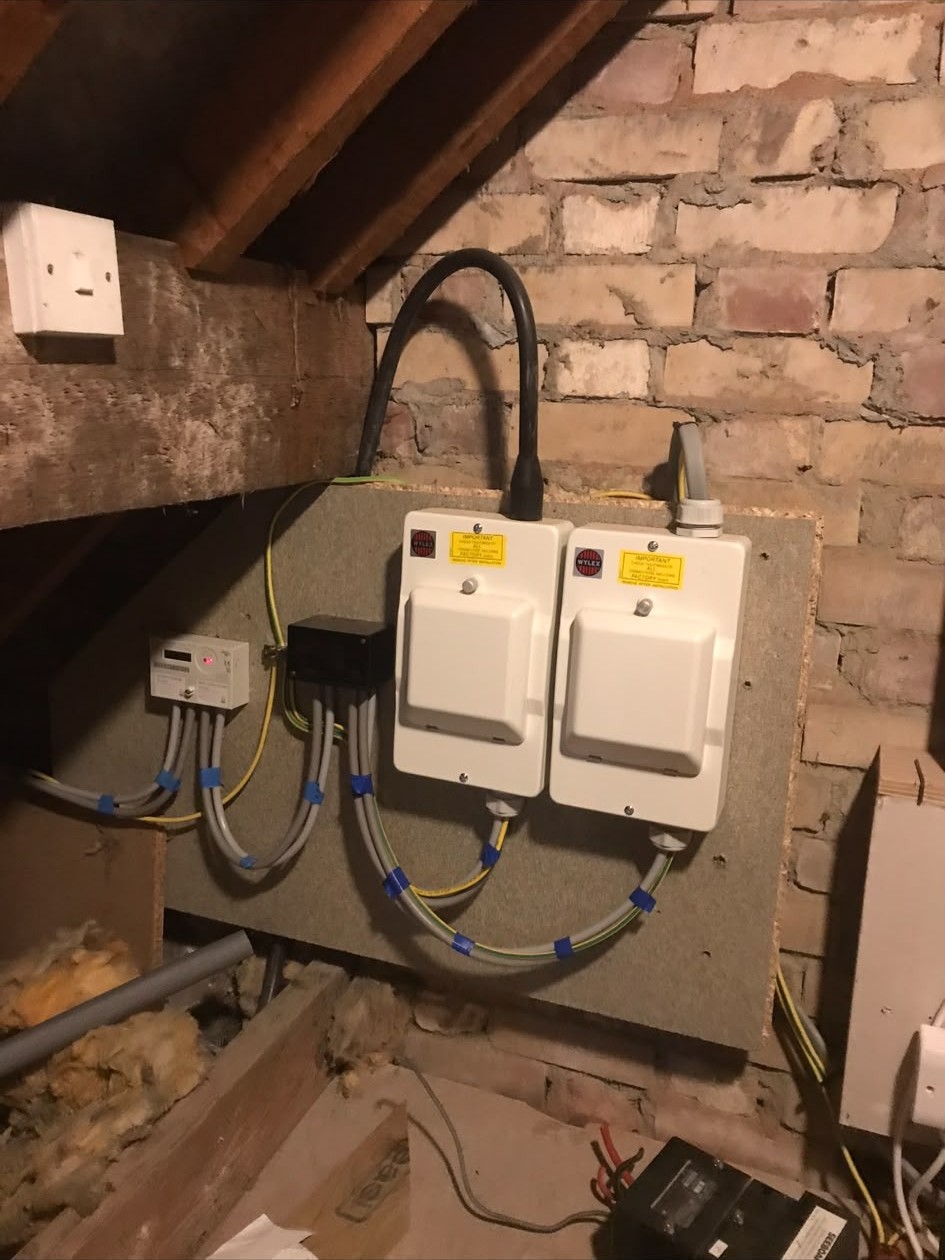
Consumer unit upgrades: jobs we have finished
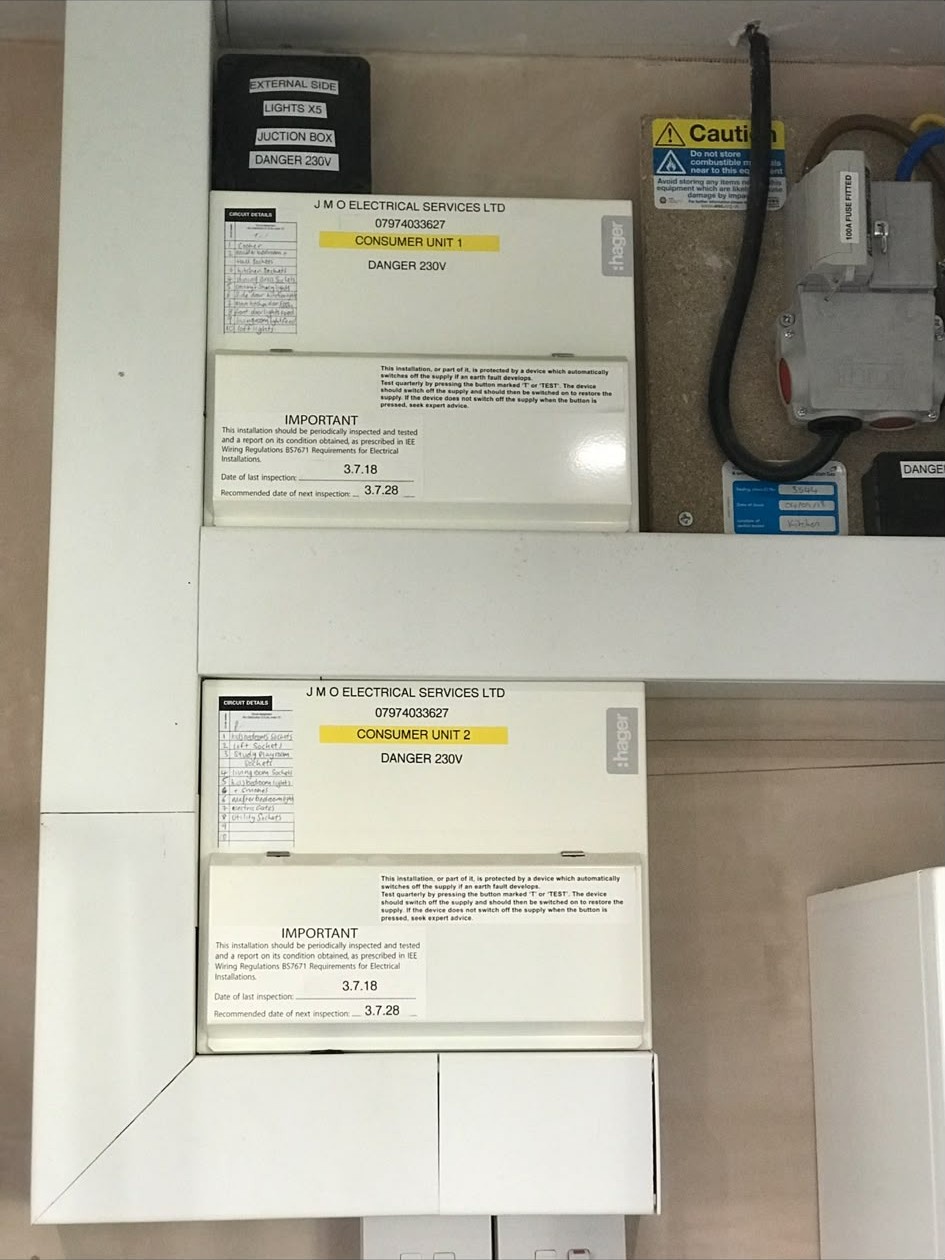
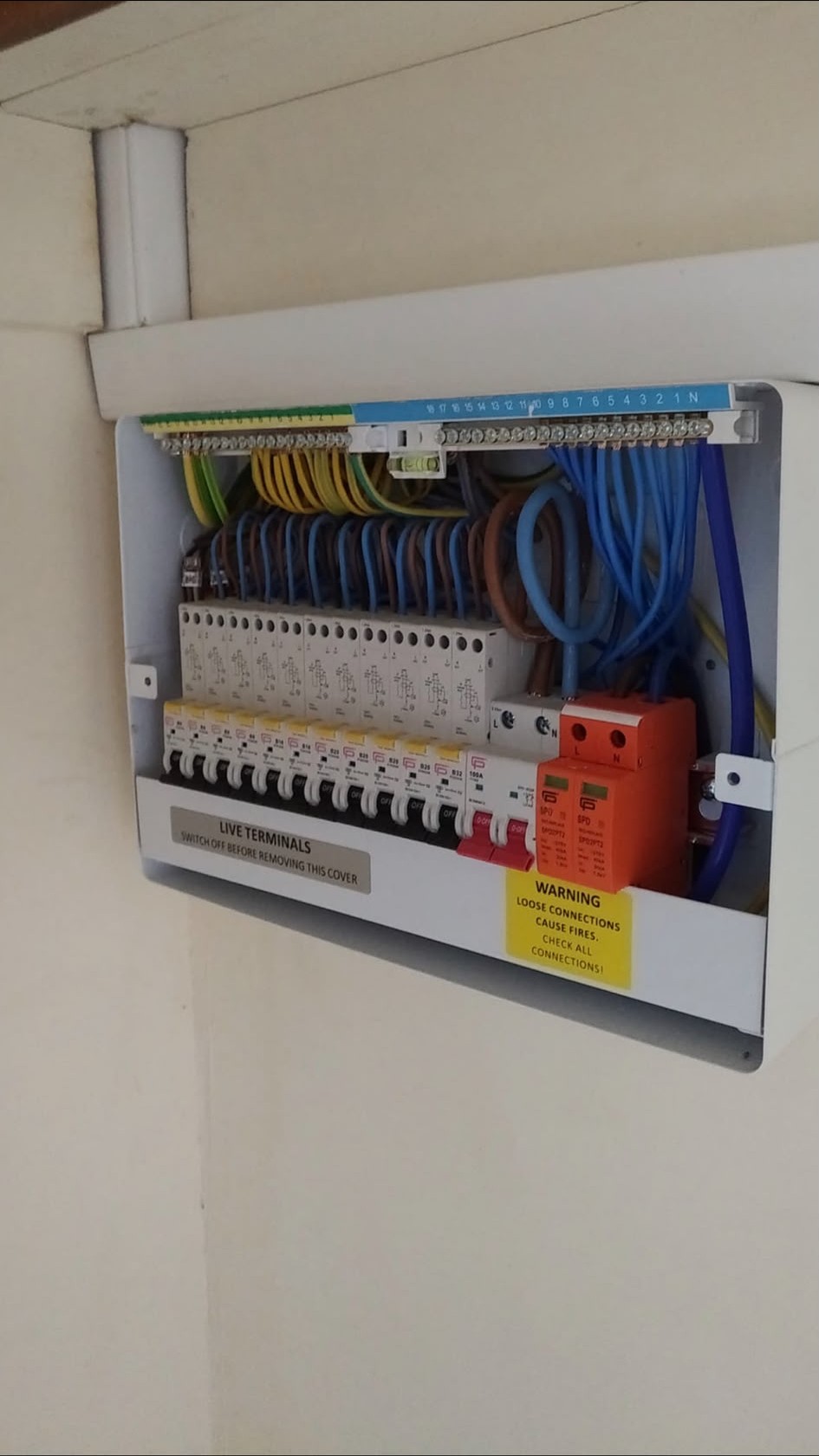
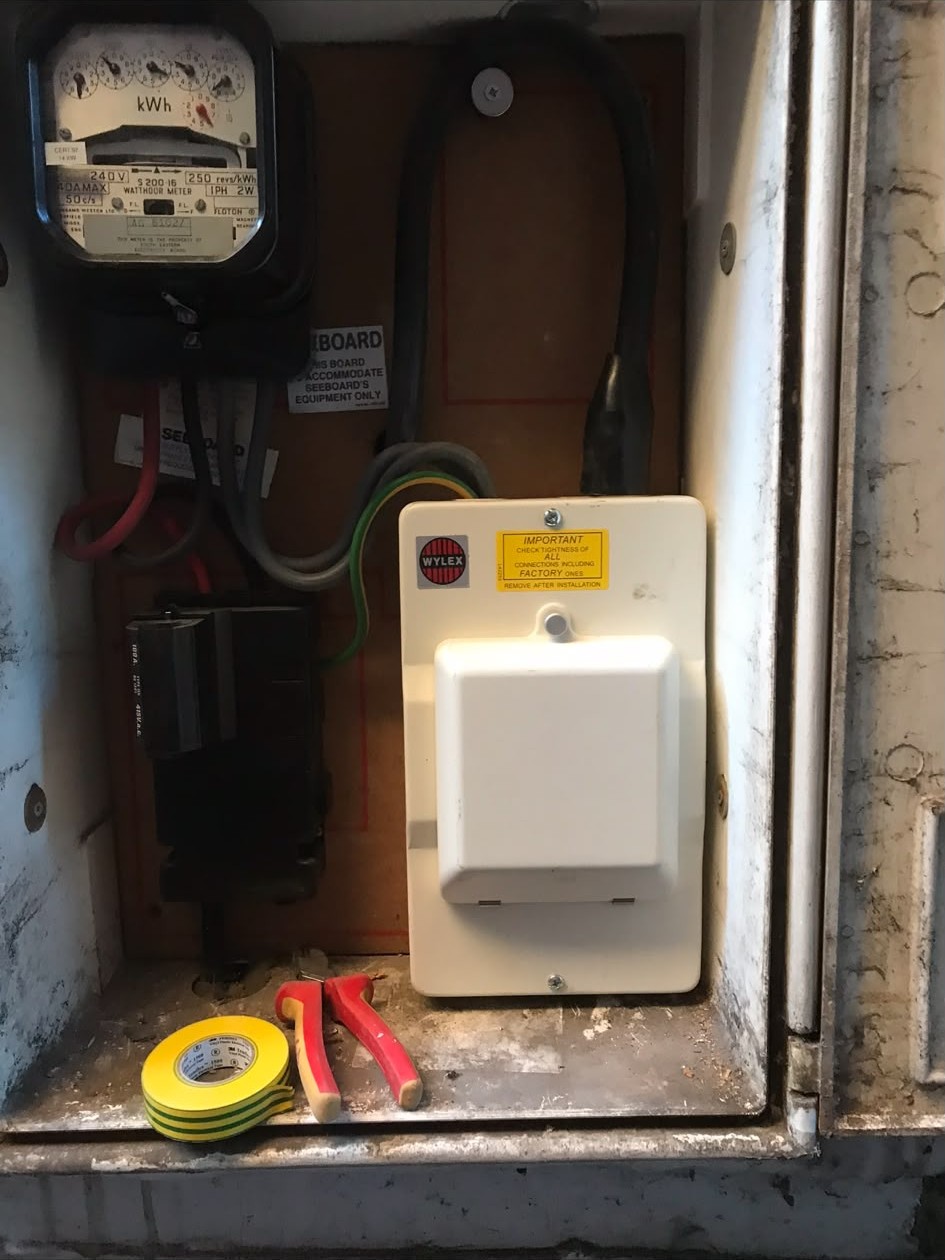
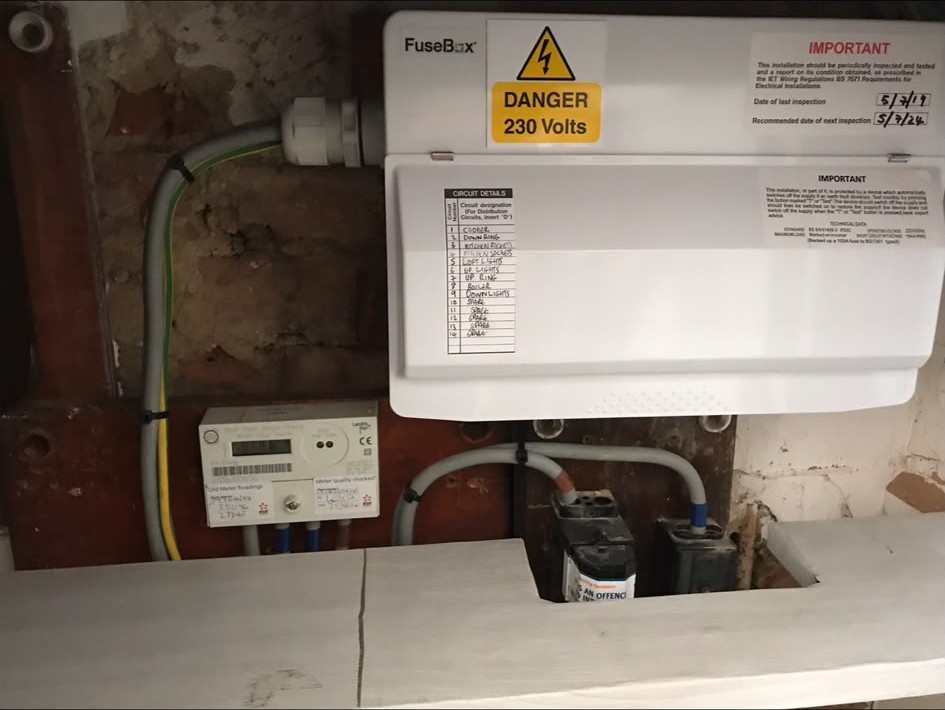
Real photographs from our own jobs across Croydon, Purley, south London and Surrey.
Reviews
What customers say
10/10
“Communications and arranging the date was excellent. Standard of work to a high standard and all to the agreed quotation.”
10/10
“Jon and his team turned up promptly as agreed, completed all works to a high standard and at a reasonable price.”
10/10
“Quickly turned up and safely dealt with cut cable to external garage. Great communication throughout.”
FAQs
Consumer unit upgrades: common questions
How much does a consumer unit upgrade cost?
It depends on the number of circuits, the specification of the board and whether earthing, bonding or meter tails need work. Jon inspects first and gives you a free written quote with everything itemised.
How long does it take to change a fuse box?
Most domestic boards are completed within a single working day, including the testing of existing circuits. You will be without power for part of that day.
Do I have to have RCD protection?
Current regulations require RCD protection for the great majority of domestic circuits. A new board without it would not be compliant or certifiable.
What happens if you find a fault on an existing circuit?
You are told immediately, shown the test result, and given a separate quote. We will not sign off a board over a circuit fault, and we will not bundle the repair in without telling you.
Will I get a certificate?
Yes: an Electrical Installation Certificate with a full schedule of test results, and Part P notification through our NAPIT registration.
Is a metal consumer unit really necessary?
For domestic installations, the enclosure must be non-combustible under current regulations, which in practice means a steel unit.
How long will a new consumer unit last?
A quality board installed correctly should serve for decades. We would recommend a periodic inspection every ten years for an owner-occupied home and every five for a rental.
Can you fit a board in an emergency?
If a board has failed or is unsafe we will attend, make the installation safe and replace it, evenings and weekends are charged at £140 per hour, with standard hours 8:00am to 5:30pm.
Do I need an upgrade before an EV charger or shower is fitted?
Often yes. The board needs a spare way with appropriate protection and the supply needs to carry the extra load. Jon assesses both before quoting the new circuit.
Areas covered
Consumer unit upgrades across Surrey and south London
Related services
New here? Start on the JMO Electrical home page, browse all services, or get in touch with Jon.
Get a free quote for a modern, certified consumer unit
Jon checks the board, earthing and bonding, prices the work in writing and tests every circuit behind it before signing anything off.