
House rewires in Purley,done once and done properly
A full rewire replaces every cable, socket, switch and light point in the property, then certifies the lot, so you stop paying for repeat repairs on wiring that was installed for a different century's demands.
NAPIT registered, £2 million insured, 10/10 on Checkatrade, 320 reviews logged over the years and 15 years on the tools in Purley and Croydon.
NAPIT registered
Government-approved competent person scheme
Part P registered
Domestic work certified to Building Regulations
£2 million cover
Public liability insurance on every job
1 year guarantee
Workmanship guaranteed for twelve months
10/10 on Checkatrade
320 reviews logged on the profile over the years
Service overview
House rewires explained
Old rubber or fabric-sheathed wiring, sockets that spark, a fuse box that trips for no reason, a rewire ends the guesswork. We plan the work around your household, keep the mess contained and certify everything at the end.
What it involves
A rewire means stripping out the existing wiring and replacing it with new cable, new accessories and a new consumer unit, all designed around how the property is actually used today. A full rewire covers every circuit in the building. A partial rewire replaces the circuits that have failed or fallen behind, commonly the upstairs lighting, the kitchen ring or anything still running in rubber or fabric-sheathed cable, while sound circuits are tested and kept.
Either way the job ends with testing, an Electrical Installation Certificate and notification under Part P, so the paperwork stands up when you sell, let or insure the property.
Who it is for
Homeowners in Purley, Croydon and the surrounding Surrey postcodes who have bought an older property and been told by a surveyor that the installation is at the end of its life. Landlords who have had an EICR come back unsatisfactory with C1 or C2 codes across multiple circuits. Buyers renovating a house before moving in, where a rewire is far cheaper with the floors up and the plaster off.
Commercial occupiers of small units, shops and offices where the original installation predates the load now being drawn also come to us, the principles are identical, the scheduling is what changes.
When you need it
Wiring does not last forever. Rubber-insulated cable from the 1950s and 60s crumbles at the terminations. Fabric-sheathed cable from the 70s dries out. An installation that has never been tested, has no earthing to the bathroom, runs from a rewireable fuse board or has sockets added on spurs off spurs is overdue.
The practical triggers we see most: a fuse board with ceramic fuses or no RCD, two-pin round sockets, no earth at the light switches, black rubber cable visible in the loft, or an EICR listing faults on most circuits. Extensions, loft conversions and kitchen refits are also natural moments to rewire, because the disruption is already happening.
Why it needs a qualified electrician
A rewire is a design job before it is an installation job. Circuit counts, cable sizes, protective device selection, earthing and bonding, RCD arrangement and the route each cable takes all have to work together, and all of it is notifiable work under Part P of the Building Regulations.
Getting it wrong is not a cosmetic problem. Undersized cable overheats behind plaster. Missing bonding leaves metalwork live under fault. An uncertified rewire can hold up a sale or void an insurance claim. Jon is NAPIT registered, which means the work is inspected against the scheme's standards and can be notified to Building Control on your behalf.
What happens if it waits
The cost of leaving it
Old wiring rarely fails politely. It degrades quietly, then presents as a fire, a shock or a failed sale.
Risks and escalation
- Perished insulation exposes live conductors inside walls and ceiling voids, where a fault can smoulder in timber before anything trips.
- Boards without RCD protection will not disconnect fast enough to protect a person touching a live part, the difference between a shock and a fatality is measured in milliseconds.
- Overloaded circuits from decades of added sockets and spurs run hot, degrading terminations and accelerating the next failure.
- An unsatisfactory EICR on a rented property means the work has to be done inside 28 days, usually at short notice and at whatever price is available.
- Buyers' solicitors routinely ask for electrical certification. No paperwork means a price reduction, a retention, or a collapsed chain.
Common mistakes we are called to undo
- Patching one circuit at a time for years, which costs more in call-outs than the rewire would have cost outright.
- Accepting a cheap price with no written scope, then discovering making good, the consumer unit or the certification were never included.
- Letting a general builder run cable during a renovation and hoping an electrician will certify it afterwards, nobody can certify work they did not see installed.
- Rewiring without upgrading the consumer unit, leaving new cable protected by a device that cannot protect it.
Every quote we issue is free and written against a defined scope, so you can see exactly what is and is not included before a single floorboard comes up.
Our process
How the job runs, start to finish
Step 1
Survey and free quote
Jon walks the property, opens the board, checks the earthing arrangement and the incoming supply, and agrees circuit counts, socket and light positions with you. You get a written quote fixed to that scope, free of charge.
Step 2
Planning and programme
We agree the order of work room by room, where you will need power at each stage, and how long you will be without it. For occupied houses we usually keep at least one working circuit live throughout.
Step 3
First fix
Floors lifted, walls chased, new cable run back to the board position and accessory boxes set. Dust sheets down, chasing kept tight, and debris cleared at the end of each day rather than at the end of the job.
Step 4
Second fix and consumer unit
Sockets, switches, light fittings and the new consumer unit are fitted and connected, circuit by circuit, so power comes back progressively rather than all at the end.
Step 5
Testing, certification and guarantee
Every circuit is dead-tested and live-tested to BS 7671, the Electrical Installation Certificate is issued, the work is notified under Part P, and the whole installation carries our one year workmanship guarantee.
What's included
House rewires with JMO
- Full and partial rewires for houses, flats and commercial units
- Clear written quote before anything starts, free, and fixed to the scope agreed
- Consumer unit upgraded and tested as part of the work where needed
- Certification issued on completion and 1 year workmanship guarantee
Costs, plainly
Free quotes on planned work. £85 call-out during standard hours, which covers the first hour of work on fault-finding jobs. Evenings and weekends £140 per hour. All workmanship guaranteed for one year.
Benefits
What you get out of it
Speed where it matters
Circuits are energised as they are completed, so you are not living without power for the full duration of the job.
Genuine shock protection
RCBO protection on every circuit means a fault isolates one circuit in milliseconds instead of plunging the house into darkness.
Decades of service life
Modern thermoplastic cable installed to current regulations is specified for the life of the building, not the next ten years.
Lower running costs
No more recurring call-outs to trace faults in wiring that was always going to fail, and LED-ready lighting circuits throughout.
Paperwork that holds up
Certification and Part P notification satisfy solicitors, letting agents and insurers without argument.
One accountable tradesman
Jon quotes the job, does the job and answers the phone afterwards. There is no call centre between you and the person who did the work.
In detail
House rewires: the detail that matters
Full rewire or partial rewire?
A full rewire is the right answer when the installation is uniformly old, when the property is empty or being renovated, or when an EICR has coded faults across most circuits. A partial rewire suits a property where, say, the ground floor was done fifteen years ago but the upstairs lighting still runs in fabric cable.
We will always tell you honestly which one the property needs. Testing the existing circuits is what settles it, not a guess from the doorway.
- Full rewire: all circuits, new consumer unit, new accessories throughout, full certification
- Partial rewire: defined circuits replaced, remaining circuits tested and recorded on the certificate
- Kitchen or bathroom rewire as part of a refit, coordinated with your fitter
- Pre-sale or pre-let remedial rewiring to clear coded observations
Materials and methods
Standard domestic circuits are wired in twin and earth to the appropriate size, typically 2.5mm² for ring final circuits, 1.5mm² for lighting, 6mm² or 10mm² for showers and cookers depending on the load and route. Cables are run in permitted safe zones, mechanically protected where they pass through joists or shallow chases, and grouped with their de-rating in mind.
Outbuildings, garages and garden offices are fed in steel wire armoured cable. Commercial and exposed runs may use conduit or trunking. Consumer units are metal-clad to current amendment requirements, generally with RCBO protection per circuit, plus surge protection where the installation warrants it.
Earthing and main protective bonding to gas and water services are checked and upgraded as part of every rewire, it is one of the most commonly missing items we find in older Croydon and Purley housing stock.
Living in the house while it happens
Most of our rewires are in occupied homes. That shapes how we work: dust sheets and floor protection every day, chases cut tight and vacuumed at source, one room finished before the next is opened up, and a clear conversation each morning about which sockets will be live that day.
Making good is discussed up front. We fill chases and leave surfaces ready for decoration unless you have asked for a plasterer to follow us; either way it is stated on the quote so there is no argument at the end.
Residential and commercial differences
Domestic rewires are notifiable under Part P and are notified through our NAPIT registration. Commercial installations are not covered by Part P but are still designed, installed, inspected and certified to BS 7671, and typically involve three-phase supplies, distribution boards, emergency lighting interfaces and fire alarm circuits that need coordinating.
For shops, offices and small units we schedule around trading hours where possible, including evening and weekend phases, so the rewire does not cost you turnover on top of the works.
Areas we rewire in
We rewire across Purley, Croydon, Caterham, Coulsdon, Sanderstead, Warlingham, Kenley, Sutton and into London. Being based on Roffey Close in Purley means survey visits and follow-ups are quick, you are not waiting a fortnight for someone to come back and finish a detail.
Recent work
House rewires: jobs we have finished
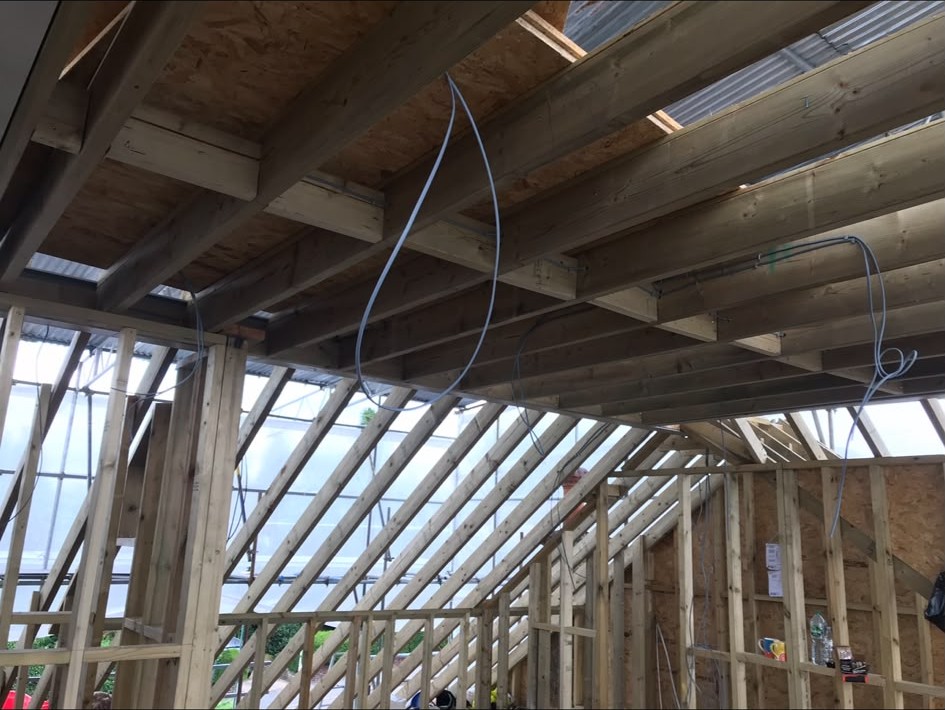
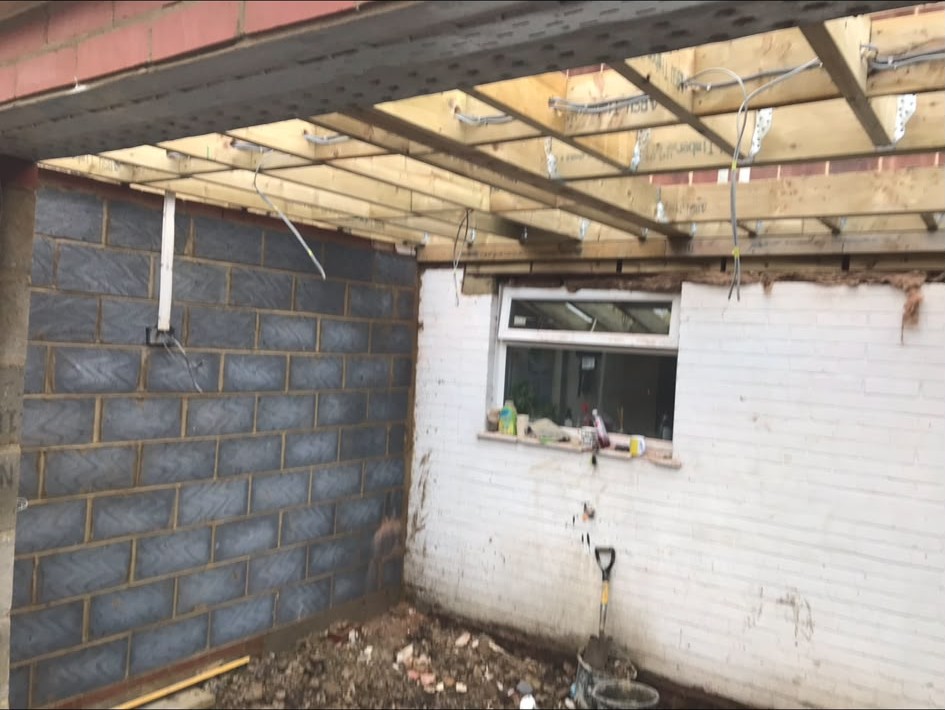
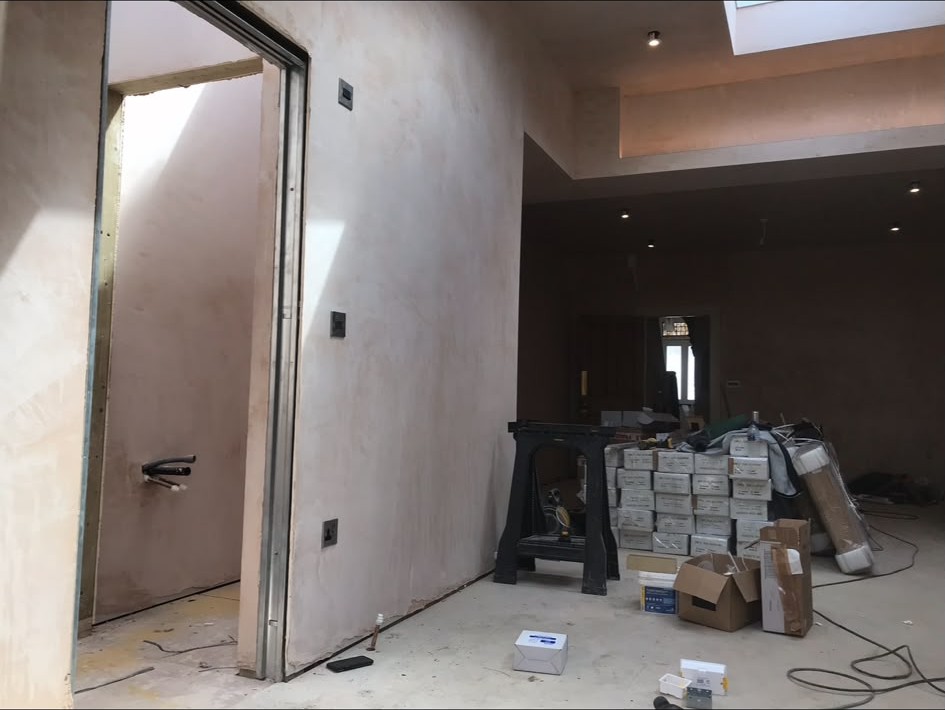
Real photographs from our own jobs across Croydon, Purley, south London and Surrey.
Reviews
What customers say
10/10
“Communications and arranging the date was excellent. Standard of work to a high standard and all to the agreed quotation.”
10/10
“Jon and his team turned up promptly as agreed, completed all works to a high standard and at a reasonable price.”
10/10
“Quickly turned up and safely dealt with cut cable to external garage. Great communication throughout.”
FAQs
House rewires: common questions
How much does a house rewire cost in Croydon or Purley?
Price depends on the number of circuits, the size of the property, the accessories you choose and how much making good is involved, so we do not publish a flat figure. The quote is free, written and fixed to the agreed scope, and Jon will walk you through what drives the number.
How long does a rewire take?
A typical three-bedroom house is usually a matter of days rather than weeks, split between first fix and second fix. The programme is agreed with you before we start so you know which rooms and which days are affected.
Do I need to move out during a rewire?
Usually not. Most of our rewires are carried out in occupied homes, working room by room and keeping power available each night. An empty property is quicker, but living in is entirely workable.
Will the walls need replastering afterwards?
Chases are filled as standard. Whether the surfaces are left ready for decoration or fully replastered is agreed and written into the quote before work begins, so there are no assumptions on either side.
Do I get a certificate when the rewire is finished?
Yes. You receive an Electrical Installation Certificate with the test results for every circuit, and the work is notified under Part P through our NAPIT registration.
Is the work guaranteed?
All workmanship is guaranteed for one year, and JMO Electrical carries £2 million public liability insurance on every job.
Can you rewire just part of the house?
Yes. Partial rewires are common, a failed lighting circuit, an old kitchen ring, or the circuits coded on an EICR. We test what stays and record it on the certificate.
Can you start in an emergency if wiring has failed?
Emergency call-outs are available evenings, weekends and around the clock for dangerous faults, charged at £140 per hour outside standard hours of 8:00am to 5:30pm. We make the installation safe first, then quote the rewire properly.
How long will a new rewire last?
An installation wired to current regulations with quality accessories is specified for decades of service. We would recommend a periodic inspection every ten years for an owner-occupied home, or every five years for a rented property.
Areas covered
House rewires across Surrey and south London
Related services
New here? Start on the JMO Electrical home page, browse all services, or get in touch with Jon.
Get a free, written rewire quote from Jon
No obligation, no sales visit, no pressure. Jon surveys the property, explains what it actually needs and puts it in writing, including what can wait.